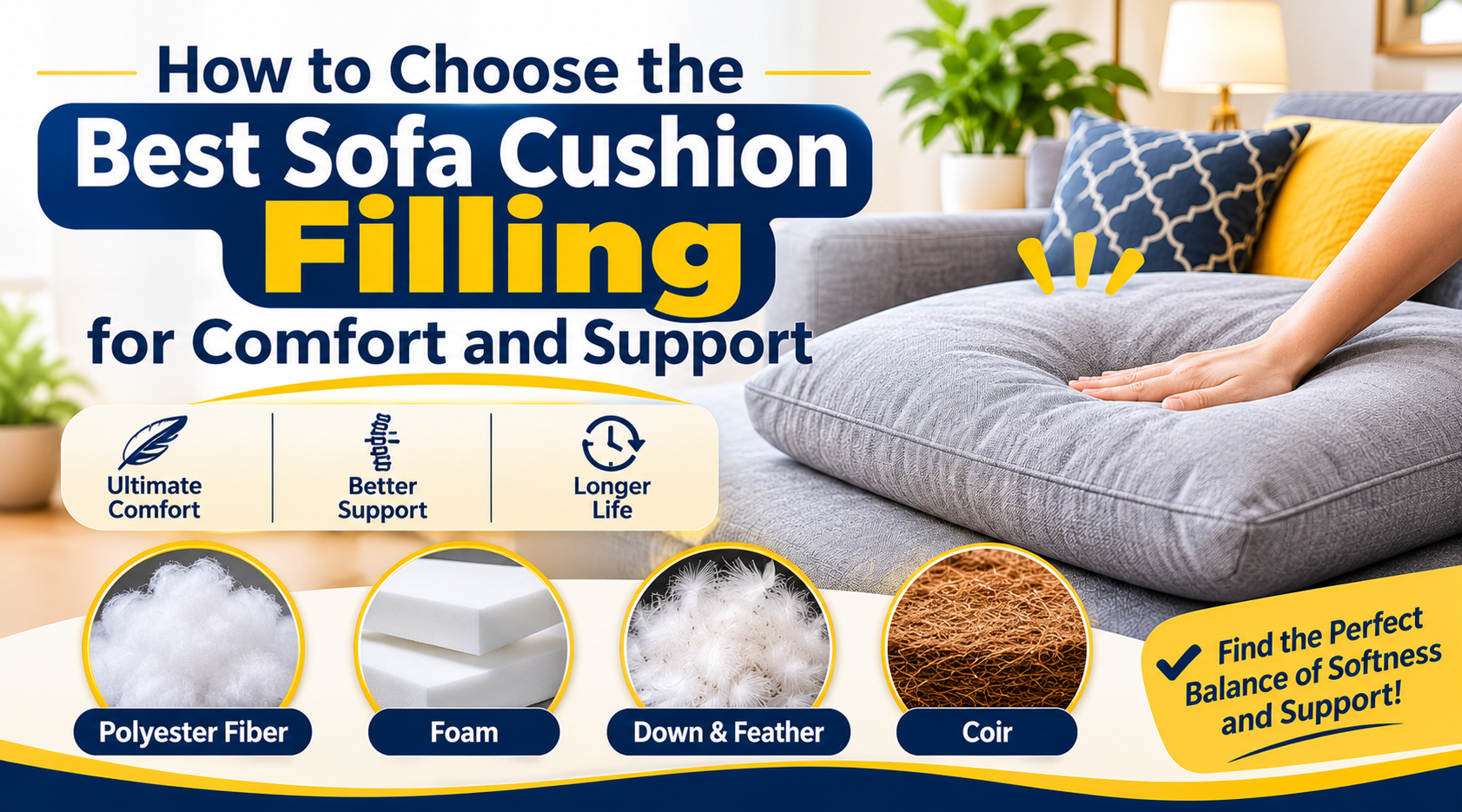
When buying a sofa, most people focus
on its design, colour, size, and upholstery. However, one important factor that
directly influences everyday comfort is often overlooked: the cushion filling.
The material inside the cushions determines how the sofa feels when you sit,
how well it supports your body, and how it maintains its shape over time.
Choosing the right Sofa Cushion
Filling can make a significant difference to your seating experience. Some
fillings provide a firm and supportive feel, while others offer a softer and
more relaxed seating experience. Different materials also have different
maintenance requirements and shape-retention characteristics.
Whether you are purchasing a new sofa
for your living room, upgrading an existing seating arrangement, or exploring
customised furniture, understanding cushion filling options can help you make a
more informed decision.
In this guide, we explain the common
types of Sofa Cushion Filling, their characteristics, important selection
factors, and how to maintain sofa cushions for everyday use.
What Is Sofa Cushion Filling and Why Does It Matter?
Sofa cushion filling refers to the
material placed inside the seat and back cushions of a sofa. It provides the
softness, firmness, and support that you experience when sitting.
The filling also influences the
cushion's appearance and how it responds to regular use. A cushion that feels
comfortable initially may not maintain the same feel if its filling is
unsuitable for the intended use.
The right Sofa Cushion Filling matters
for several reasons:
●
Seating comfort: It determines
whether the sofa feels soft, medium, or firm.
●
Body support: The filling
affects how the seat supports your body while sitting.
●
Shape retention: Different
materials respond differently to repeated pressure.
●
Appearance: Cushion filling
contributes to the overall shape and fullness of the sofa.
●
Maintenance: Some fillings
require more regular fluffing or adjustment than others.
●
Personal preference: The best
choice depends on whether you prefer a soft or supportive seating experience.
Before choosing a sofa, it is useful
to understand the available cushion filling materials.
1. Foam Sofa Cushion Filling
Co stojí za kvalitou, která není na první pohled vidět |
JECH
Foam is one of the commonly used
materials for sofa cushions. It is available in different densities and
firmness levels, allowing manufacturers to create different seating
experiences.
Foam cushions can provide a structured
appearance and are available in options ranging from softer to firmer support.
Benefits of Foam Sofa Cushion Filling
●
Available in different firmness
levels.
●
Can provide a supportive
seating feel.
●
Helps cushions maintain a
defined shape, depending on the foam type and quality.
●
Can be used in different sofa
designs.
●
Generally requires less
frequent fluffing than loose fibre or feather fillings.
What to Consider
Not all foam is the same. Its comfort
and durability depend on factors such as density, quality, thickness, and
construction.
When comparing foam Sofa Cushion
Filling, ask about the foam specification and whether it is suitable for the
intended seating requirements.
2. High-Density Foam Sofa Cushion Filling
Which Foam Is Better for Sofa Cushions? A Practical Guide
to Density, Firmness, and Longevity
High-density foam is a foam option
commonly considered for sofa seating. It is designed with a higher
concentration of foam material within a given volume than lower-density
options.
The actual comfort depends on the
foam's firmness and other specifications. Density and firmness are not the same
thing: a high-density foam can be manufactured in different firmness levels.
Benefits of High-Density Foam
●
Can offer a supportive seating
experience.
●
Often used in seat cushions
that need a structured feel.
●
May help cushions retain their
shape when appropriately selected.
●
Available in different
specifications for different furniture requirements.
Is High-Density Foam Right for Your Sofa?
High-density foam may be worth
considering if you prefer a more structured seating feel. However, do not
select it based on density alone. Ask about firmness, foam quality, and
suitability for your sofa design.
3. Fibre Sofa Cushion Filling
What's Really Inside Your Sofa? Cushion & Pillow
Fills Explained
Fibre filling is commonly used in sofa
back cushions and can also be used in certain seat cushion constructions. It
generally creates a softer and more relaxed appearance than firm foam.
Fibre-filled cushions may feel
comfortable and plush, making them suitable for people who prefer a softer
seating style.
Benefits of Fibre Sofa Cushion Filling
●
Provides a soft and comfortable
feel.
●
Can create a fuller cushion
appearance.
●
Suitable for relaxed back
cushions.
●
Can be used alongside other
filling materials.
What to Consider
Fibre cushions may require regular
plumping or adjustment to maintain their appearance. Their long-term
performance depends on the type and quality of fibre used.
When considering fibre Sofa Cushion
Filling, ask how often the cushions may need maintenance and whether the covers
allow easy adjustment.
4. Feather and Down Sofa Cushion Filling
Hotel Quality Duck Feather Down Cushion Pads Inner Insert
Scatter Cushion Filler | eBay UK
Feather and down fillings are
associated with a soft, relaxed, and luxurious seating experience. They are
often used in decorative or back cushions, although the exact construction
varies by manufacturer.
These fillings can create a relaxed
appearance with cushions that can be reshaped by hand.
Benefits of Feather and Down Filling
●
Offers a soft and plush feel.
●
Creates a relaxed cushion
appearance.
●
Can be reshaped through regular
plumping.
●
Suitable for certain
luxury-inspired sofa designs.
What to Consider
Feather and down cushions usually
require regular maintenance to maintain their shape. They may not be the right
choice for people who prefer firm, structured seating.
Also, check the exact filling
composition, as products may use different proportions of feather, down, and
other materials.
5. Memory Foam Sofa Cushion Filling
How to Tell if a Sofa Is High-Quality: 7 Real Signs You
Can’t Ignore
Memory foam is known for responding to
pressure and gradually returning towards its original shape after the pressure
is removed. It is used in some furniture cushion applications.
The experience depends on the specific
formulation, thickness, and construction.
Benefits of Memory Foam
●
Responds to pressure from the
body.
●
Can provide a different seating
feel compared with conventional foam.
●
Available in different product
specifications.
●
May be used as part of a
layered cushion construction.
What to Consider
Memory foam may feel different from
traditional sofa foam. Some people prefer its pressure-responsive feel, while
others may prefer a more traditional or firmer seat.
Before choosing memory foam Sofa
Cushion Filling, test the cushion if possible and ask about its construction.
6. Combination Sofa Cushion Filling
Tipos de relleno para sofás: cuál elegir | Confort
Liquidación
Some sofa cushions use a combination
of materials rather than relying on one filling type. For example, a foam core
may be wrapped with fibre to create a balance between support and softness.
This construction can provide a more
customised seating feel, depending on the materials and design.
Benefits of Combination Filling
●
Can balance structure and
softness.
●
Offers flexibility in cushion
design.
●
Can create a fuller cushion
appearance.
●
Allows manufacturers to
customise the seating experience.
When exploring combination Sofa
Cushion Filling, ask which materials are used and how the layers work together.
Comparison of Different Sofa Cushion Filling Types
Cushion | General | Common |
Standard foam | Varies from soft to firm | Check quality and firmness |
High-density foam | Depends on firmness specification | Ask about density and suitability |
Fibre | Soft and relaxed | May require regular plumping |
Feather and down | Plush and relaxed | Requires maintenance and reshaping |
Memory foam | Pressure-responsive | Test the feel before choosing |
Combination filling | Depends on construction | Confirm the materials and layers |
There is no single filling that is
best for every sofa. Your ideal option depends on your comfort preferences,
seating habits, and the sofa's intended use.
How to Choose the Right Sofa Cushion Filling for Your Needs
Selecting the right filling requires
more than comparing material names. You should consider how the sofa will be
used and what type of seating experience you prefer.
1. Consider Your Preferred Firmness
Some people prefer soft cushions that
allow them to relax into the sofa. Others prefer firmer cushions that provide a
more structured seating experience.
If possible, sit on different cushion
types before making a decision. This is one of the easiest ways to understand
which Sofa Cushion Filling feels suitable for you.
2. Think About Daily Usage
A sofa used every day by several
family members may have different requirements from a sofa placed in a guest
room.
Consider how frequently people will
use the sofa, how long they usually sit, and whether it will be used for
relaxing, reading, watching television, or entertaining guests.
3. Check Cushion Shape Retention
Ask how the cushion filling responds
to repeated use and whether regular plumping is necessary.
Foam-based cushions and loose-filled
cushions may behave differently. Understanding these differences helps you
choose a suitable design.
4. Consider Seat and Back Cushions Separately
Seat cushions and back cushions do not
always need the same filling.
A sofa may use a more supportive
material in the seat and a softer material in the back cushions. This can
create a combination of structure and relaxation.
5. Understand Maintenance Requirements
Some cushion types need regular
plumping, while others may require less frequent adjustment.
Before selecting Sofa Cushion Filling,
ask about cleaning instructions, cushion rotation, and whether the covers are
removable.
6. Check the Overall Sofa Construction
Comfort does not depend on cushion
filling alone. The frame, seat suspension, cushion thickness, upholstery, and
sofa dimensions also influence the overall seating experience.
A well-designed sofa should bring
these elements together.
Signs That Your Sofa Cushion Filling May Need Replacement
Over time, regular use can affect the
comfort and appearance of sofa cushions. The following signs may indicate that
the filling needs attention:
●
Cushions look noticeably uneven
or flattened.
●
The seat feels less supportive
than before.
●
Cushions do not regain their
shape after use.
●
You notice uncomfortable dips
in frequently used areas.
●
The filling feels uneven inside
the cushion.
●
The sofa no longer provides the
seating comfort you expect.
These signs do not always mean that
the entire sofa needs replacement. Depending on the construction, cushion
refilling or replacement may be an option.
Common Mistakes to Avoid When Choosing Sofa Cushion Filling
Choosing the wrong filling can affect
your comfort and satisfaction with a sofa. Avoid these common mistakes:
Selecting Filling Based Only on Softness
A very soft cushion may feel
comfortable initially, but it may not provide the level of support you prefer.
Consider both comfort and support.
Ignoring Foam Specifications
The words "foam cushion" do
not explain the complete quality or performance of the material. Ask about
density, firmness, and construction.
Using the Same Filling for Every Cushion
Seat and back cushions have different
functions. Their filling requirements may also differ.
Forgetting About Maintenance
Loose-filled cushions may need more
regular plumping and adjustment. Consider whether you are comfortable with the
maintenance involved.
Not Testing the Sofa Before Purchase
Product descriptions cannot always
communicate the exact seating experience. Whenever possible, try the sofa in
person.
Tips to Maintain Your Sofa Cushion Filling
Regular care can help keep your
cushions looking neat and comfortable.
●
Rotate seat cushions when the
sofa design allows it.
●
Plump loose-filled back
cushions regularly.
●
Avoid placing excessive weight
on one small section for long periods.
●
Follow the manufacturer's
upholstery and cleaning instructions.
●
Keep cushions away from
conditions that may damage their materials.
●
Check removable covers and care
labels before washing.
●
Address uneven or damaged
cushions before the problem becomes more noticeable.
The correct maintenance routine
depends on the type of Sofa Cushion Filling used in your furniture.
How Altron Sofa Can Help You Explore Comfortable Sofa Options
Choosing a sofa involves understanding
how its design, upholstery, frame, and cushion construction work together. The
right combination can help create a seating arrangement that suits your living
room and everyday requirements.