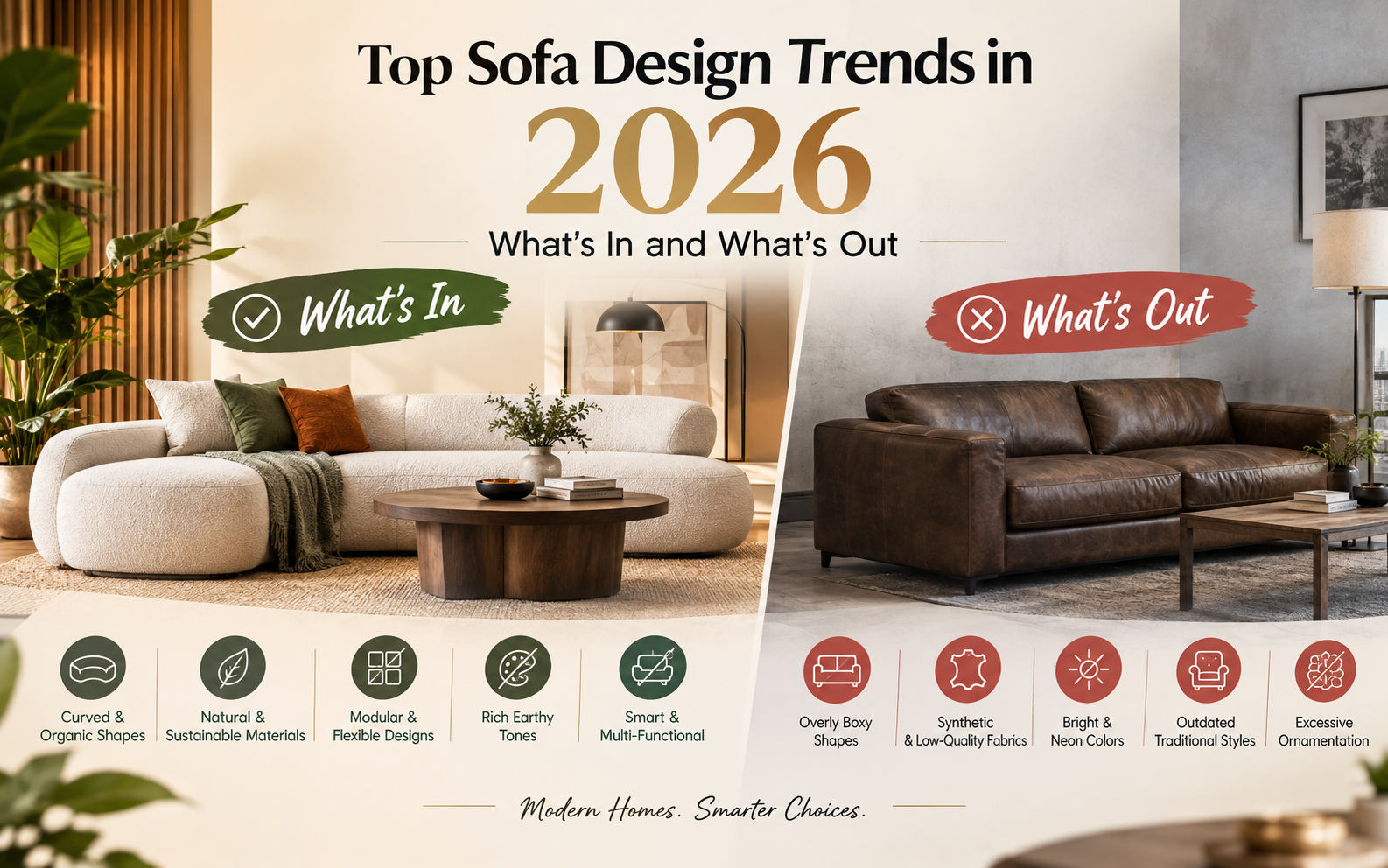
Your sofa is the centerpiece of your living room — it sets
the tone for your entire home's aesthetic. Every year, design trends shift
based on lifestyle changes, material innovation, and evolving tastes. In 2026,
we're seeing a clear move toward comfort-driven, sustainable, and flexible
design, away from the sharp, cold, ultra-formal looks that dominated in
previous years.
Whether you're redoing your entire living room or simply
swapping out your sofa, understanding these trends will help you make a choice
that feels fresh today and still looks great years from now. Let's break down
exactly what's shaping sofa design this year — and what's on its way out.
1. Curved and Rounded Silhouettes
Boxy, sharp-edged sofas are steadily being replaced by soft,
organic curves. Rounded arms, gently sloped backs, and cloud-like cushions are
dominating showrooms and design catalogs alike.
Why it's trending: Curved furniture feels more
welcoming and less rigid, softening the overall look of a room. It also tends
to photograph and flow better in open-plan homes where the sofa is visible from
multiple angles.
How to use it: Pair a curved sofa with straight-lined
coffee tables or shelving to balance the softness with structure, rather than
making the whole room feel overly rounded.
2. Earthy and Muted Tones
Cool greys and stark whites are giving way to warmer,
nature-inspired palettes — terracotta, olive green, sand, rust, and mocha brown
are leading the charge in 2026.
Why it's trending: These tones create a grounded,
calming atmosphere and pair effortlessly with wood tones, rattan, and natural
textures that are also trending in interior design.
How to use it: If you're not ready to commit to a
bold earthy sofa, start with cushions or a throw in these tones before going
all-in on upholstery.
3. Modular, Rearrangeable Sofas
As homes increasingly serve multiple purposes — home office,
guest space, entertainment room — modular sofas that can be reconfigured on
demand are becoming a top choice.
Why it's trending: A single modular set can function
as a large sectional for movie nights, split into two smaller sofas for a
rearranged layout, or adapted for a new home without needing replacement.
How to use it: Look for modular sofas with detachable
ottomans and interchangeable arm pieces for maximum flexibility over time.
4. Sustainable and Natural Materials
Sustainability has moved from a niche preference to a
mainstream expectation. Buyers are actively asking about FSC-certified wood
frames, water-based adhesives, recycled foam fillings, and organic or recycled
fabric blends.
Why it's trending: Increased awareness of
environmental impact, paired with a desire for healthier indoor materials
(low-VOC finishes, natural fibers), is driving demand for greener furniture
options.
How to use it: Ask your furniture provider about
frame sourcing and filling materials — reputable brands will be transparent
about this.
5. Bouclé and Textured Fabrics
Smooth, flat fabrics are taking a back seat to bouclé,
chenille, corduroy, and other richly textured weaves.
Why it's trending: Texture adds visual depth and a
tactile, cozy quality that flat fabrics can't replicate — it also tends to hide
minor wear better over time.
How to use it: Textured fabrics work especially well
in neutral or earthy tones, letting the texture (rather than color) do the
visual work.
6. Statement Legs and Exposed Frames
Wooden or metal legs in bold finishes — matte black, brushed
brass, warm walnut — are being used as intentional design accents rather than
hidden structural elements.
Why it's trending: Exposed, styled legs create a
lighter visual footprint and add a mid-century or Scandinavian-inspired touch
to otherwise simple sofas.
How to use it: Match leg finishes to other metal
accents in the room (light fixtures, drawer handles) for a cohesive look.
7. Two-Toned and Multi-Textile Sofas
Sofas featuring two complementary colors or fabrics — for
instance, a different shade on the back cushions versus the base — are emerging
as a subtle way to add personality.